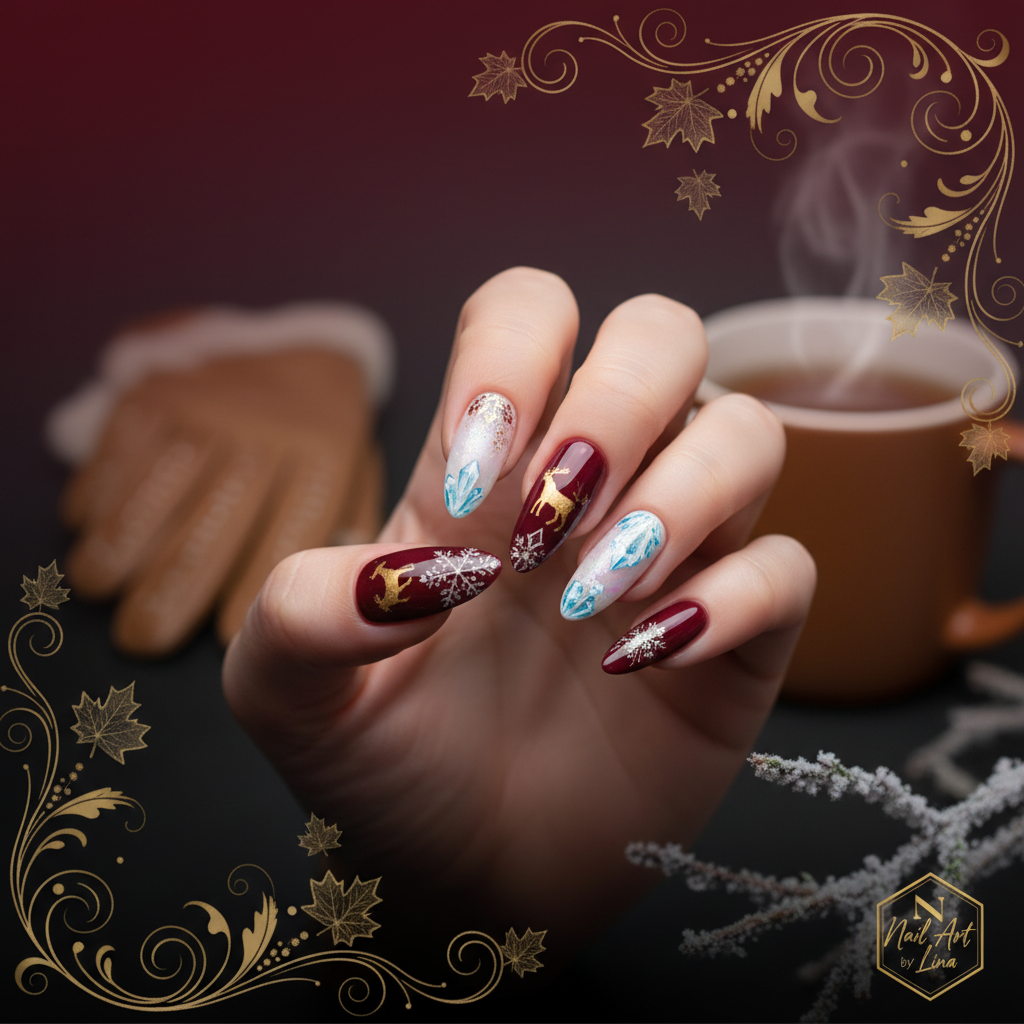
Seasonal Nails: What Your Press-Ons Need to Survive Winter in Canada
Cold air, indoor heat, and constant gloves — winter in Canada is hard on press-on nails. Here's how to keep them perfect from November through March.
Seasonal Nails: What Your Press-Ons Need to Survive Winter in Canada
Canadian winters are beautiful. They are also absolutely brutal on nail adhesion.
If you've noticed your press-on nails lifting faster in December than in July, you're not imagining it. Cold, dry air — combined with the constant cycle of indoor heat, outdoor cold, and layers of gloves — creates conditions that challenge even the best application.
Here's how to adapt your routine so your nails stay stunning from the first snowfall to the first thaw.
Why Winter Is Harder on Press-Ons
Cold temperatures cause materials to contract slightly, including both the nail plate and the press-on itself. This micro-movement can stress adhesive bonds over time.
Dry indoor heat dehydrates the nail plate and cuticle area, creating micro-cracks in the skin around the nail that can work their way under the press-on.
Constant glove use creates friction and can catch on nail edges, creating lift points.
Temperature swings — going from -20°C outside to a heated office — are the real culprits. Repeated expansion and contraction is the enemy of adhesion.
The Winter Prep Upgrade
Your standard application routine gets one important addition in winter: primer.
Use a nail primer (available at any nail supply store) after your dehydrator step. This creates an extra bonding layer that compensates for the added stress cold weather creates.
Also: apply your nails in a room-temperature environment. Don't apply press-ons right after coming in from the cold. Let your hands fully warm up — about 15 minutes at room temperature — before application.
The Glove Problem (and the Solution)
Pulling gloves on and off is one of the top causes of winter nail loss. The tips of gloves catch on the free edge and apply upward pressure — exactly the direction most likely to pop a nail.
Fixes:
- Pull gloves from the cuff rather than by the fingers
- Choose gloves one size up — roomier fingertips mean less friction
- Use touchscreen gloves where possible to reduce removal frequency
- Apply a layer of top coat to the free edge weekly to reinforce the seal
Moisture Management
Winter skin is dry skin — and that dryness affects your nail bed too.
Do:
- Apply cuticle oil to the base of each nail every evening (not on the press-on surface — just the cuticle area)
- Use a hand cream immediately after washing hands
- Drink more water — dehydration is visible in the nail plate
Don't:
- Apply oils directly on the press-on nail surface (it can break down adhesion)
- Skip moisturizer just because you have nails on
Winter Colour & Style Tips
Winter in Canada calls for certain aesthetics:
- Deep burgundy, forest green, midnight navy — classic winter luxe
- Holographic and chrome finishes — catch the light like fresh snow
- Velvet textures and matte finishes — cozy and sophisticated
- Crystal and gemstone embellishments — they catch candlelight beautifully at holiday events
All of these are specialties in the Nail Art by Lina collection.
What About the Pool or Hot Tub in Winter?
Hot tubs are significantly harder on press-ons than regular water because:
- The heat causes materials to expand
- The jets create pressure under the nail edge
- Pool/hot tub chemicals break down adhesive bonds
Recommendation: If you're going in a hot tub, accept some nail casualty risk. Apply glue from a precision tube to any lifting edges immediately after, and seal with top coat.
FAQ
Do press-on nails fall off faster in winter? They can, because of cold temperatures, dry air, and glove use. Upgrade to a primer-based application in winter and reseal edges weekly.
Can I wear press-on nails skiing? Yes — with ski gloves on, your nails are actually quite protected. The risk is glove removal. Use nail glue (not just tabs) for ski trips.
How do I fix a press-on nail that lifts in the cold? Apply a drop of nail glue under the lifted edge, press firmly for 20 seconds, and seal with clear top coat. Works perfectly for partial lifts.
What's the best nail shape for winter glove wearers? Shorter lengths — short to medium squoval or oval. They're less likely to catch in glove seams.
Frequently Asked Questions
Why do press-on nails lift faster in winter?
Cold, dry air and temperature swings cause the nail plate and press-on materials to contract and expand, stressing adhesive bonds. Add a primer to your winter routine.
How do I protect nails when wearing gloves?
Pull gloves from the cuff, not the fingers. Choose gloves one size up for roomier fingertips, and reinforce the free edge with top coat weekly.
Can I wear press-ons skiing or snowboarding?
Yes — ski gloves actually protect your nails. Use nail glue (not adhesive tabs) for multi-day winter sports and they'll hold up well.
Ready to wear your art?
Explore Lina's one-of-a-kind nail sets — each a wearable masterpiece.
Shop the Collection