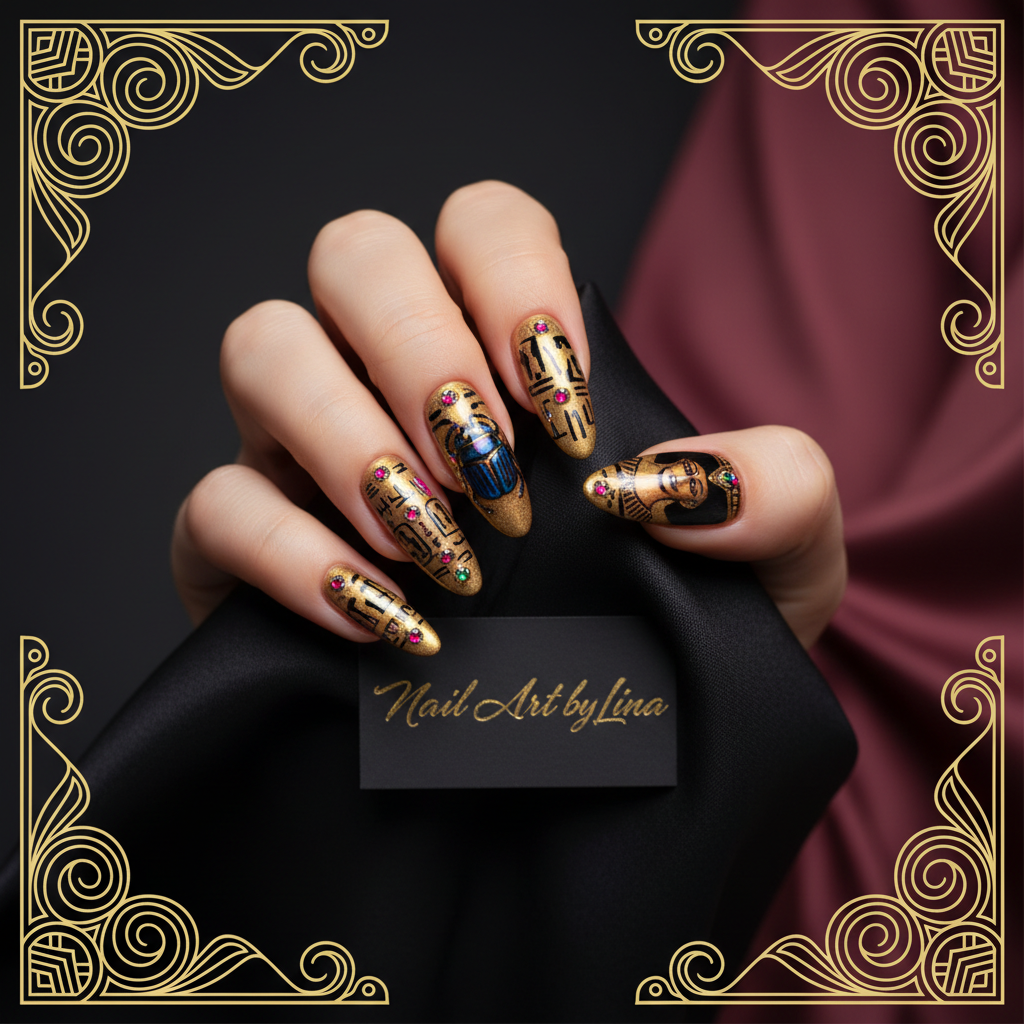
The Ancient History of Nail Art: From Egyptian Royalty to Press-On Perfection
Nail art isn't a trend — it's a 5,000-year-old tradition of power, status, and beauty. From pharaohs to fashion runways, here's the full story.
The Ancient History of Nail Art: From Egyptian Royalty to Press-On Perfection
When you paint your nails, you're participating in a ritual that goes back five millennia. Nail art is not a modern invention — it is one of humanity's oldest forms of personal adornment, and it has always been about more than aesthetics. It has been about power, status, identity, and art.
Let's trace the full journey.
Ancient Egypt (3200 BCE)
The earliest recorded nail art traces to ancient Egypt, where both men and women of the ruling class used henna to stain their fingernails. The shade of colour communicated social rank:
- Deep red and rust tones indicated royalty and nobility
- Pale, pastel shades were worn by those of lower rank
- Cleopatra herself reportedly wore deep red nails — a colour symbolizing power and divine authority
Nails were such a status symbol that commoners were prohibited from wearing the same colours as the ruling class.
Ancient China — The Ming Dynasty (1368–1644)
In imperial China, elaborate nail art became an art form of breathtaking complexity. Noble women of the Ming Dynasty grew their nails to extraordinary lengths — sometimes several inches — as a display of wealth (long nails meant you didn't perform manual labour).
They protected and decorated these nails with gold and silver nail guards, encrusted with jade, pearls, and precious stones. The Empress Dowager Cixi was famous for her ornate 6-inch nails, guarded in jewelled sheaths.
The Chinese also developed one of the first nail lacquer formulas — a blend of beeswax, egg whites, gelatin, and flower petals that created a sheer, glossy finish.
The Mughal Empire — India (16th Century)
In Mughal courts, women used intricate mehendi (henna) designs that extended across nails, palms, and fingers. These were not casual decorations — they were ceremonial art forms with spiritual meaning, applied for weddings, religious festivals, and royal occasions.
The 20th Century: Nail Polish as We Know It
Modern nail polish has a surprisingly industrial origin. In 1917, Cutex introduced the first commercial nail polish — originally a clear formulation. By the 1920s, inspired by automobile paint technology, coloured polishes arrived.
Michelle Menard at Revlon developed the opaque, pigmented formula in the 1930s that would define nail colour for the century to come.
The red nail — already ancient in its symbolism — became the definitive beauty statement of Hollywood's golden age. Stars like Rita Hayworth and Marilyn Monroe cemented its association with glamour and feminine power.
The Press-On Evolution
Press-on nails arrived in the 1970s as a practical salon solution. For decades, they were dismissed as cheap alternatives to acrylics — the rhinestone-encrusted drugstore sets your aunt wore to bingo.
The pivot came in the 2010s, when advances in soft gel technology and the rise of nail artistry as a legitimate fine art form transformed press-ons into what they are today: premium, customisable, artisan-crafted wearable art.
Artists like Lina — who bring fine art training and technical mastery to each set — represent the full arc of this history. From Egyptian royalty adorning their nails to mark their power, to women today choosing one-of-a-kind handcrafted designs to express theirs.
The Modern Nail Art Movement
Today, nail art is a global industry worth over $12 billion USD. It spans:
- Nail competitions with international recognition
- Nail artists with millions of social media followers
- Luxury nail sets commanding hundreds of dollars
- NFT-linked nail art (emerging)
- Museum-worthy nail sculptures exhibited as fine art
The nail has officially graduated from beauty accessory to cultural artefact.
FAQ
When was nail polish invented? Commercial nail polish was introduced in 1917. Pigmented colours became widely available in the 1930s.
Who first wore nail art? Ancient Egyptians around 3200 BCE are among the earliest recorded nail art practitioners — using henna to indicate social rank.
What does nail art symbolize historically? Throughout history, nail art has symbolized wealth, status, power, spiritual identity, and artistic expression.
What makes modern press-on nails different from the past? Modern soft gel technology allows for lightweight, flexible, artisan-crafted press-ons that rival salon quality and last 2–3 weeks with proper care.
Frequently Asked Questions
How old is nail art?
Nail art is at least 5,000 years old, with some of the earliest examples from ancient Egypt around 3200 BCE.
Why did ancient Egyptians paint their nails?
Nail colour in ancient Egypt communicated social rank — darker, richer colours were reserved for royalty, including Cleopatra.
What is the modern nail art industry worth?
The global nail art industry is worth over $12 billion USD and continues to grow as nail artistry gains recognition as a legitimate fine art form.
Ready to wear your art?
Explore Lina's one-of-a-kind nail sets — each a wearable masterpiece.
Shop the Collection